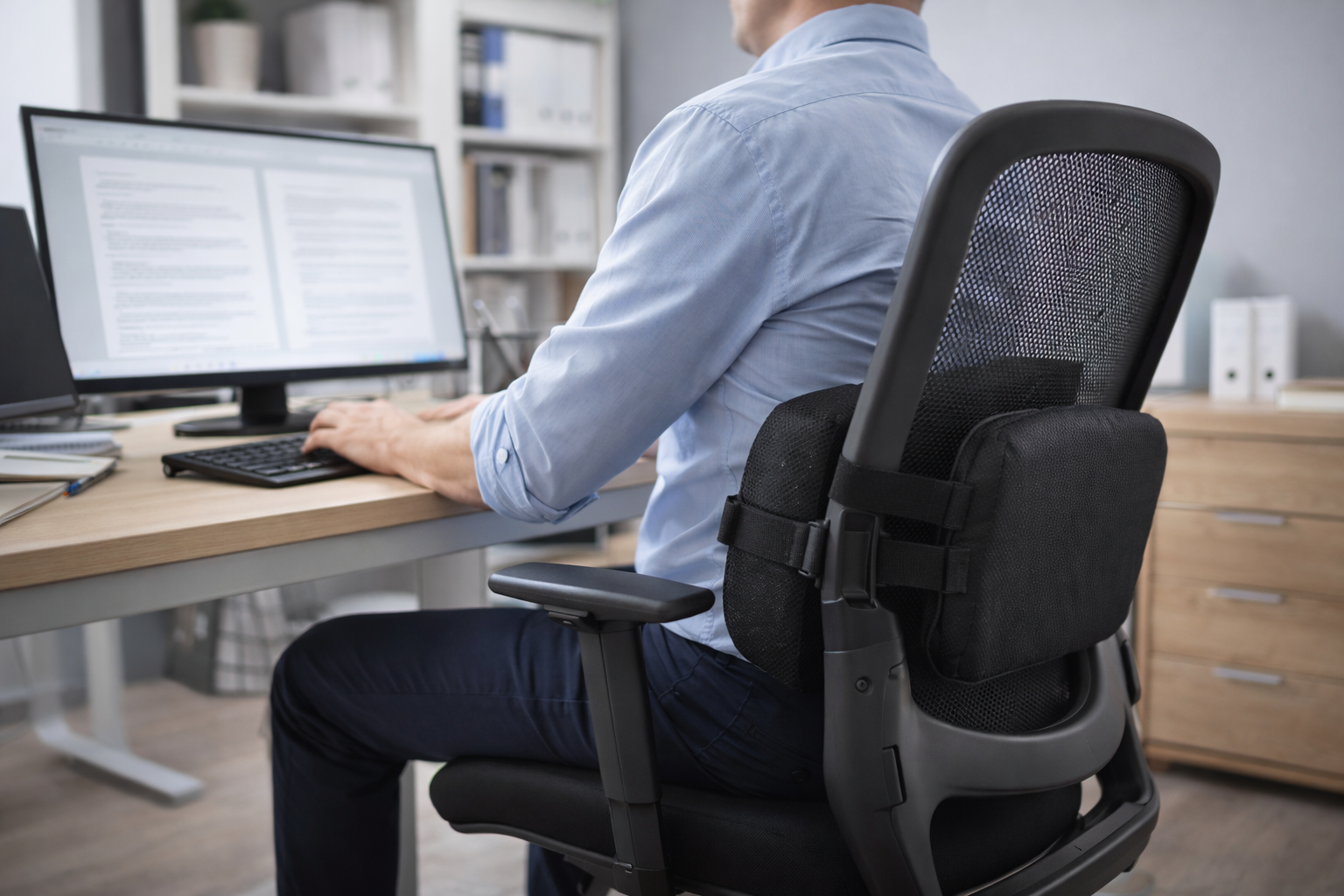
Lower Back and Hip Support for Office Workers with Sedentary Jobs
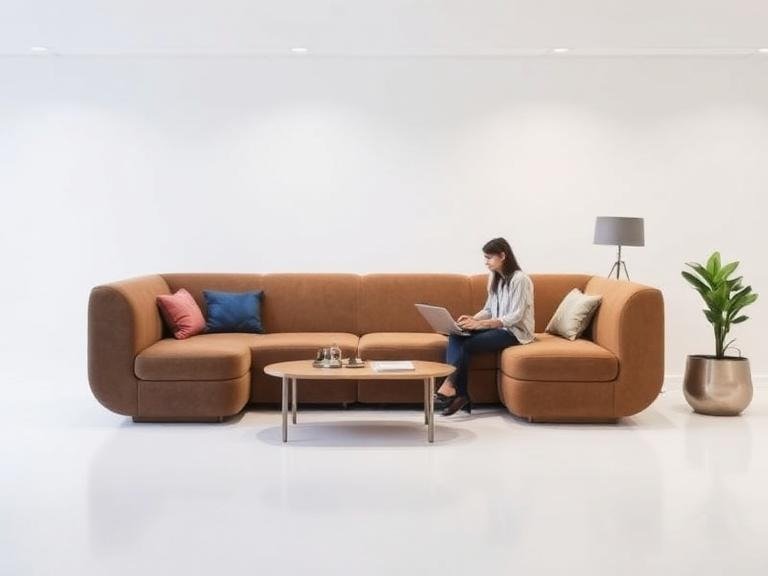
Around mid afternoon, it usually hits. The dull ache across your lower back. The tight hips. That restless shifting in your chair while emails keep coming. If this sounds familiar, you are not alone. Office work has quietly become one of the biggest contributors to ongoing lower back and hip discomfort across Australia.
Long hours at a desk ask the body to do something it was never designed for. Stay still. Sit upright. Repeat tomorrow. Over time, that pressure settles into the lower spine and hips, often showing up as stiffness, pain, or reduced mobility. This is where proper lower back hip support stops being a luxury and starts becoming essential.
Why sitting all day strains your lower back and hips
The human spine thrives on movement. When you sit for hours, especially without proper support, your pelvis tends to tilt backwards. That small shift flattens the natural curve of your lower back and places stress through the lumbar spine and hip joints.
Tight hip flexors pull on the pelvis. Weak core muscles stop doing their job. The result is a cycle of discomfort that often follows you home, into the car, onto the couch, and sometimes into sleep.
Many office workers assume pain is just part of the job. It is not. Often, the missing piece is support that works with your body rather than forcing it into an awkward position.
What effective lower back hip support actually does
Good lower back hip support is not about locking you in place. It is about gentle guidance. Think of it like a helpful hand at your back reminding your spine where neutral posture lives.
The right support helps maintain the natural inward curve of your lower back while encouraging the hips to stay aligned. This reduces pressure on spinal discs and takes strain off surrounding muscles.
For people who sit most of the day, this can mean fewer aches, better posture without constant effort, and more energy left at the end of the day.
Signs your desk setup needs support
Not sure if support would help you? These are common red flags seen in office based clients.
You feel stiff when standing up after meetings
Your hips feel tight or sore by evening
Lower back pain builds as the day goes on
You constantly adjust your chair but never feel quite right
Stretching helps temporarily but the pain keeps returning
If you nodded along to any of these, your body is asking for change.
Choosing lower back hip support that fits real office life
Not all supports are created equal. Some are too firm and feel intrusive. Others collapse after a week. When selecting lower back hip support, comfort and adaptability matter just as much as structure.
Look for designs that contour naturally to the spine and pelvis. Breathable materials are important in warmer offices. Portability helps if you move between desks or work from home part of the week.
Many office workers benefit from combining seating adjustments with targeted Lower Back Support products that stay in place and move with you rather than against you.
How support helps beyond pain relief
Pain relief is often the first benefit people notice, but it is rarely the only one.
With better alignment, muscles work more efficiently. This often leads to improved concentration and less fatigue. When your body is not fighting gravity all day, mental focus tends to follow.
Over time, consistent lower back hip support can also reduce the risk of long term issues related to disc compression and joint stiffness. Prevention quietly does its work while you get on with your day.
Small habits that amplify the benefits
Support works best when paired with a few simple habits. Nothing complicated. Just realistic changes.
Adjust your chair so feet rest flat on the floor
Stand up briefly every thirty to forty minutes
Gently stretch hips and lower back during breaks
Keep screens at eye level to avoid slouching
These small actions reinforce what your support is already doing and help your body relearn healthier patterns.
Your back deserves better than coping
Lower back and hip discomfort does not mean you are doing something wrong. It usually means your body needs better tools.
Office work is demanding enough without pain tagging along. Investing in proper lower back hip support is a practical step toward feeling better during work hours and beyond.
At Bodyassist, we focus on support products designed for real people with real routines. Whether you are managing daily discomfort or looking to prevent it before it starts, the right support can make work feel manageable again.
FAQs
1. Does lower back hip support help even if pain is mild?
Ans. Yes. Early support often prevents mild discomfort from becoming a chronic issue.
2. Can I use support on any office chair?
Ans. Most quality supports are designed to work with standard office chairs and adjustable seating.
3. How long does it take to feel a difference?
Ans. Some people notice relief within days. For others, it builds gradually as posture improves.
4. Is support useful if I already exercise regularly?
Ans. Absolutely. Exercise helps, but sitting posture still matters during long work hours.
5. Can support help with hip tightness from sitting?
Ans. Yes. Proper alignment reduces strain on hip flexors and surrounding muscles.
Disclaimer
The information provided in this article is for general educational purposes only and is not intended as medical advice. Lower back and hip support products may help alleviate discomfort associated with prolonged sitting, but results can vary depending on individual health conditions. If you experience persistent or severe pain, consult a qualified healthcare professional before using any support products or making changes to your workspace. Bodyassist and the authors of this article are not responsible for any injury, discomfort, or health issues that may arise from the use of the information or products mentioned.